
Three Pocket Pistols, Three Different Answers
John Gray Sep 23, 2026
Early 20th century gun designers were all chasing the same goal: a compact, reliable, safe pistol you could carry every day.
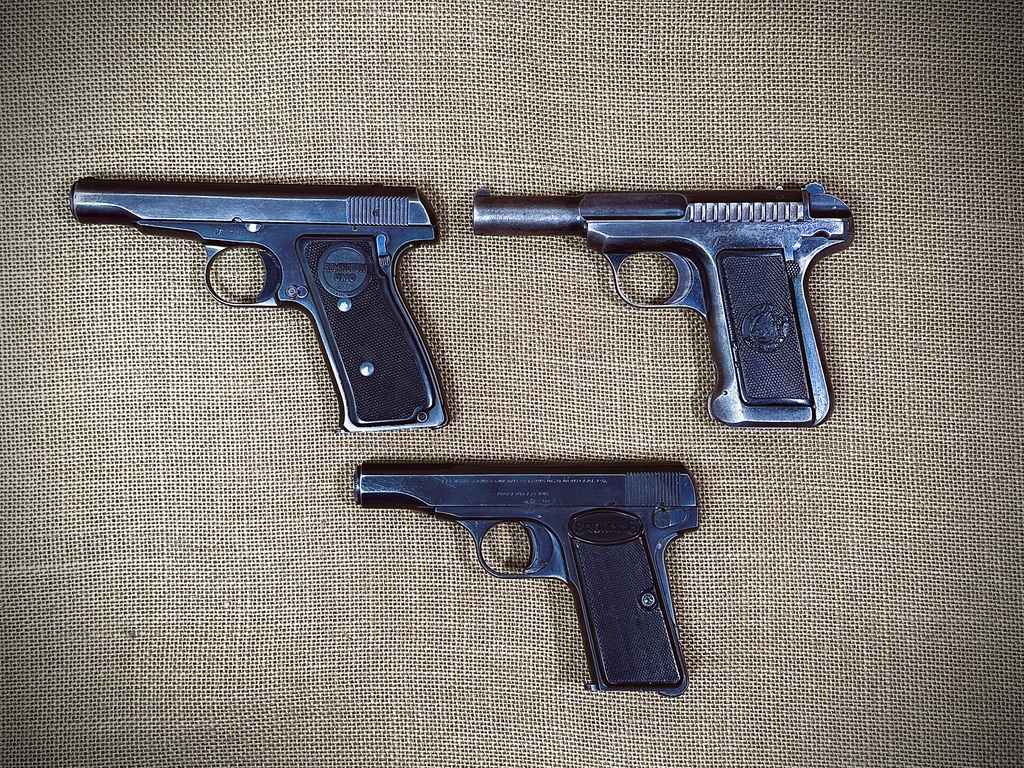
Sitting side by side, these three show how differently they got there: the Remington Model 51, a Savage pocket pistol with its Indian head grips, and the Belgian-made Browning Model 1955.
Remington Model 51 (1918-1927)
This blued Model 51 is chambered in .380 ACP with a 3.25-inch barrel and a seven-round magazine, and it dates to roughly 1921-1926, late in the production run. Serial number PA50616.
The design rests on patents John D. Pedersen took out in 1915 and 1919, and the pistol reached the market in 1918. It was offered in .32 ACP and .380 ACP, with magazines holding eight and seven rounds. Its delayed blowback action softened recoil and made the pistol pleasant to shoot.
For its day, the Model 51 was unusually safe. It had three separate safety features: a manual thumb safety on the left rear of the frame, a grip safety, and a magazine safety that kept the pistol from firing a forgotten round once the magazine was out.
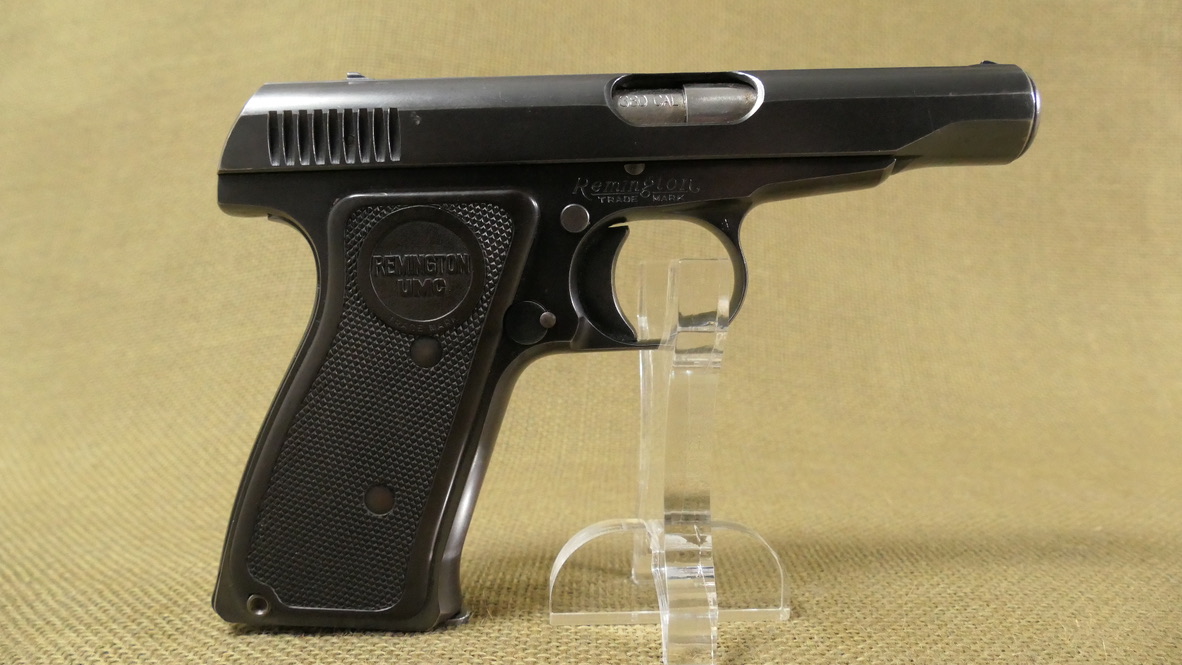
The grip earned its reputation. It was shaped so well that it felt right in almost any hand, and the pistol pointed naturally. At about 21 ounces it sat squarely in the pocket pistol class, with fixed sights and a flattened, matted slide top to cut glare.
Fewer than 65,000 were made. Production stopped in 1927 and factory stocks were gone by 1934. The decision had more to do with the economy of the day than with any flaw in the design.
Savage Automatic Pistol (1907-1928)
This Savage is chambered in .32 ACP with a 3-inch barrel and a 10-round magazine. It dates to roughly 1910-1915. Serial number 35203.
Savage Arms Co. of Utica built a range of automatic pistols between 1907 and 1928. The designs came from William Condit and Major Elbert Hamilton Searle, a former ordnance officer at Springfield Armory. Savage entered the 1907 U.S. Ordnance Department trials and built a special .45 caliber pistol in time to compete. The Ordnance Board liked what it saw and asked for 200 more for further testing, but Savage did not have the factory capacity to deliver.
The company settled on pocket pistols instead, starting with the .32 in 1907 and adding a .380 in 1913. A 1915 update introduced a so-called hammerless model with a grip safety, though none of the Savage pistols had an exposed hammer. The later Model 1917 brought a larger, better-shaped grip, and Savage even sold the .380 version to the Portuguese government, which used it as its official military pistol until manufacture was suspended in 1928.
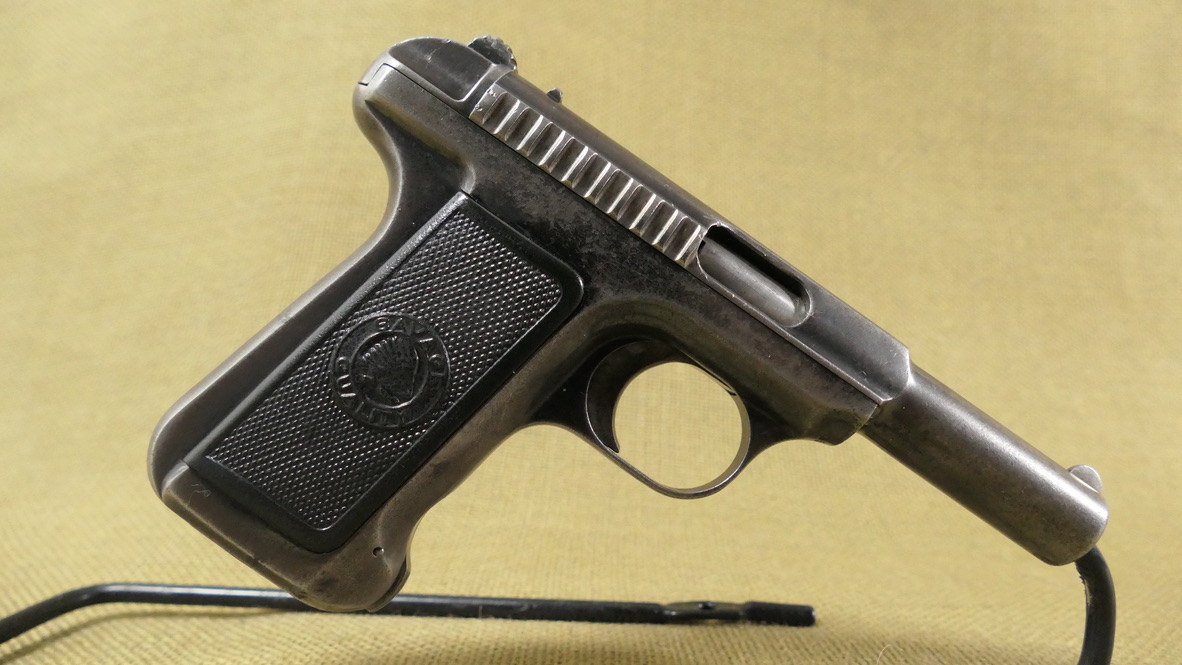
The Savage was well made and had some unusual touches, such as pressed steel grips on the earliest 1907 pistols. It also drew criticism. It had no magazine safety, it could not be safely carried uncocked with a round chambered, and a dirty action or weak sear spring could occasionally make it fire more than once per pull. Savage’s own catalogue was not shy, claiming everyone from woodsmen and trappers to police departments relied on it, and that it had even taken bear, mountain lion, and elk.
Browning Model 1955 (imported 1955-1968)
The Model 1955 is John Browning’s FN Model 1910 under an American name. Browning Arms Company began importing the Belgian-built, striker-fired, blowback .380 ACP pistol in 1955, and apart from markings and grips it was virtually identical to the European version.
This example is chambered in .380 ACP with a 3-inch barrel. Serial number 540866. The left side of the slide carries the Browning Arms Company St. Louis and Montreal import marking, and the grips are black checkered panels with the oval BROWNING medallion.
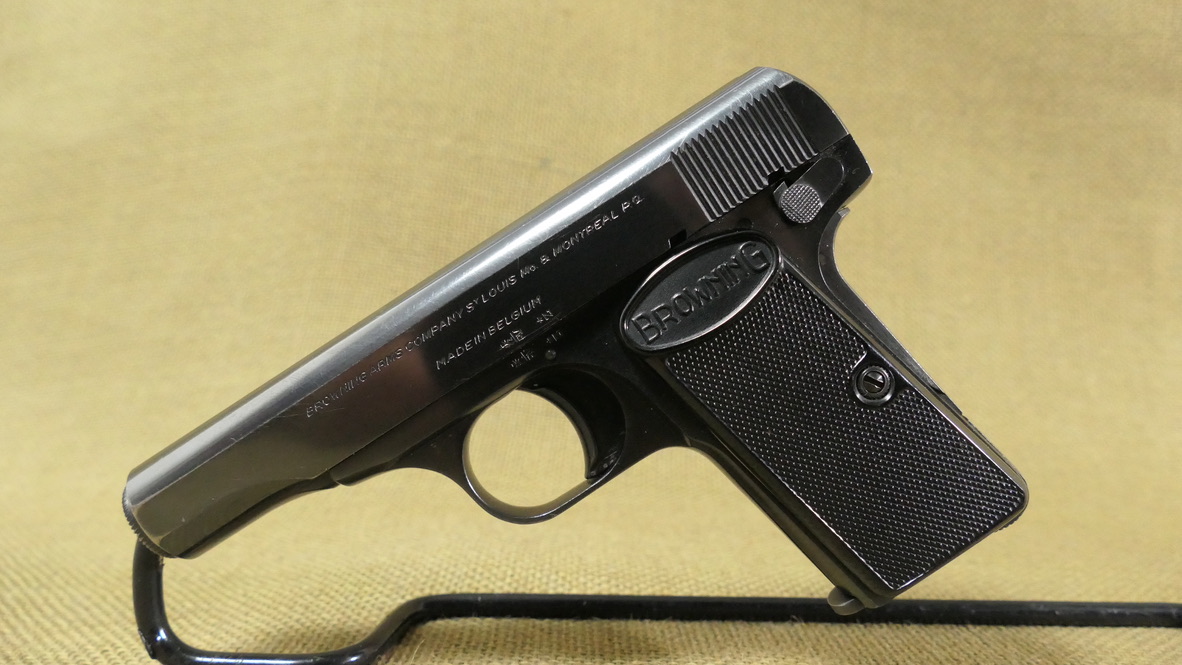
The pistol has a steel frame and slide, a fixed barrel, and an internal striker. It carries three safeties: a grip safety, a frame-mounted lever safety, and a magazine safety, and it feeds from a six-round detachable magazine. The recoil spring wraps around the barrel, one of the first semi-auto designs to do so, and that gives the slide its distinctive tubular profile. The trigger linkage and grip safety ideas share ancestry with the 1911.
The 1910 design became a standard police and military pistol across Europe in .32 and .380. It is also the type of pistol linked to the 1914 assassination in Sarajevo that set off World War I. U.S. importation ended in 1968 under tighter gun-control laws.
Why these three still matter
Together, these pistols tell the story of the pocket auto in its formative years. The Remington favored refined ergonomics and layered safety. The Savage pushed toward military adoption and offered unusual features. The Browning went for simplicity, with a proven European design that outlasted both.
For collectors, each one offers real history and a distinctive design. These pistols can be viewed in the JGray’s collection on Gunbroker.com. JGray’s Estate Firearm Services is a licensed Type 01 FFL/SOT dealer in Tulsa, Oklahoma, specializing in estate firearm consignment, appraisals, ATF-compliant transfers, and secure storage.

Store Hours